Finding your next book
Listen to one military sci-fi novel and most platforms decide you are a military sci-fi person, then spend the next twenty suggestions agreeing with themselves. It is comfortable, and you never find out what you are missing.
What I want from a bookshop is a nudge somewhere a bit unfamiliar, close enough to the last book that I would give it a go. In a good one you pick something up, the next thing catches your eye, and ten minutes later you are holding a book you had never heard of. Nobody stumbles across anything in a list of 50,000 audiobooks.
So on Spiracle, finding your next book is something you play with. Start from any book you like and the screen fills with covers that have something in common with it. Rest on one and its narrator starts reading to you. Pick one and the whole wall rearranges around it. People wander for a while and come out with something they would never have searched for.
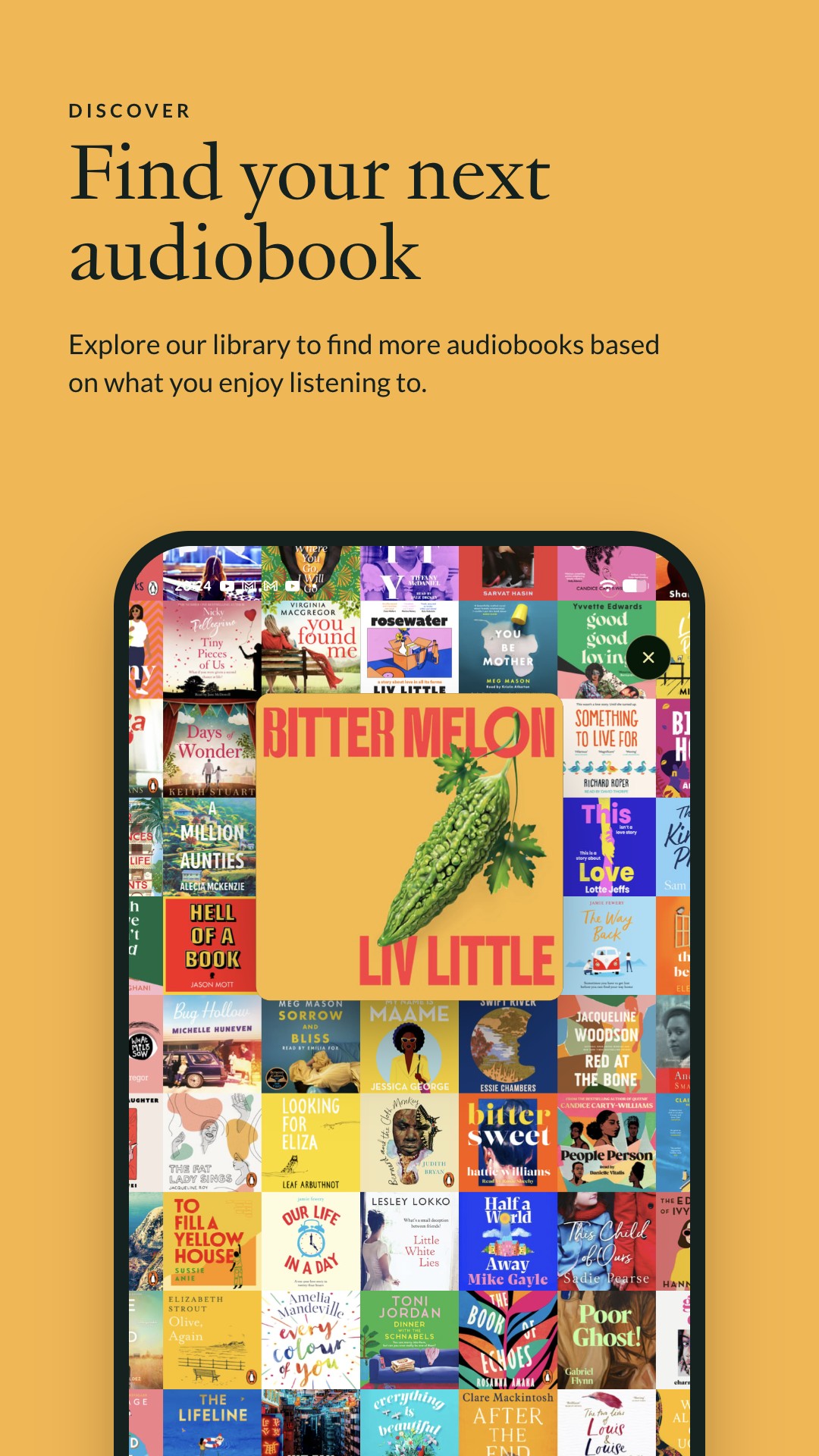 A wall of covers, with the book you started from in the middle.
The clever part is underneath. Genre tells you where a book is shelved and almost nothing about how it reads, so we describe every title a few different ways: its voice, its main character, the shape of its story. Then we compare books one description at a time. That is how Gone Girl ends up next to Rebecca. One is a modern thriller and the other was written in the 1930s, and both are about a marriage where you can't trust what you are being told. Because we know which thread joined two books, we can tell you why one is there.
The wall of covers is live now, running on a simpler set of links. The deeper version is in trial.
We are watching whether people trust it. We count whether someone shown an unfamiliar book plays the sample, adds it and listens, and whether those people go on to start a trial and stay as subscribers.